Most Likely To for Big Groups: 50+ Crowd-Pleasing Questions
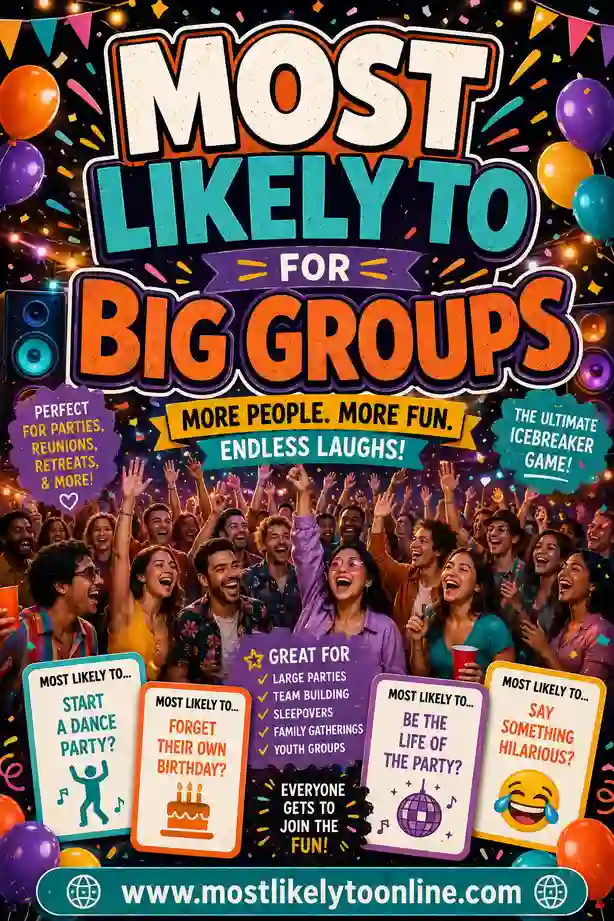
Most Likely To for big groups is a party game where you read a "Most likely to…" prompt to a whole crowd and everyone points at the person it fits best — like "Most likely to know everyone at the party" or "Most likely to start the dancing." It's a top pick for big gatherings because it needs no equipment, includes everyone at once, and gets a loud room laughing together. The easiest way to run it with a crowd is the free Most Likely To game: add all the names and let it draw prompts and pick winners for you.
Hosting a crowd tonight? Open the free game, add everyone's names, and start playing. There's a copy-paste list of 50+ crowd-pleasing questions below, plus tips for running it smoothly with 10, 20, or even 50 people.
Why Most Likely To Works So Well for Big Groups
Most party games fall apart with a big crowd. Card games stall, board games can't fit everyone, and anything with turns drags forever. Most Likely To is the opposite — it actually gets better with more people. Every prompt includes the whole room at once, the pointing creates instant energy, and a crowd produces bigger laughs than a small group ever could.
It also solves the classic big-party problem: people clumping into little circles and not mixing. A round of Most Likely To pulls everyone into one shared moment. Suddenly the whole room is looking around, pointing, and laughing at the same joke. That's exactly what a host wants. And since it needs nothing but a list of questions, you can launch it anytime the energy dips.
How to Run Most Likely To with a Crowd
The basic rules don't change, but a few tweaks keep things smooth when there are a lot of people.
- Get everyone's attention. Stand somewhere visible and let the room know you're starting a game.
- Read the prompt loudly and clearly. Repeat it once so the back of the room catches it.
- Count down, then point. "Three, two, one… point!" gives everyone a beat to scan the crowd.
- Call out the winner. In a big group, just spot who's getting the most fingers and name them. No need to count exactly.
For a crowd, the online game is a lifesaver. Add all the names and it draws prompts and randomly picks who's "most likely" each round, so you don't have to referee a sea of pointing fingers. Project it on a screen and the whole room can follow along.
The Big List: 50+ Most Likely To Questions for Big Groups
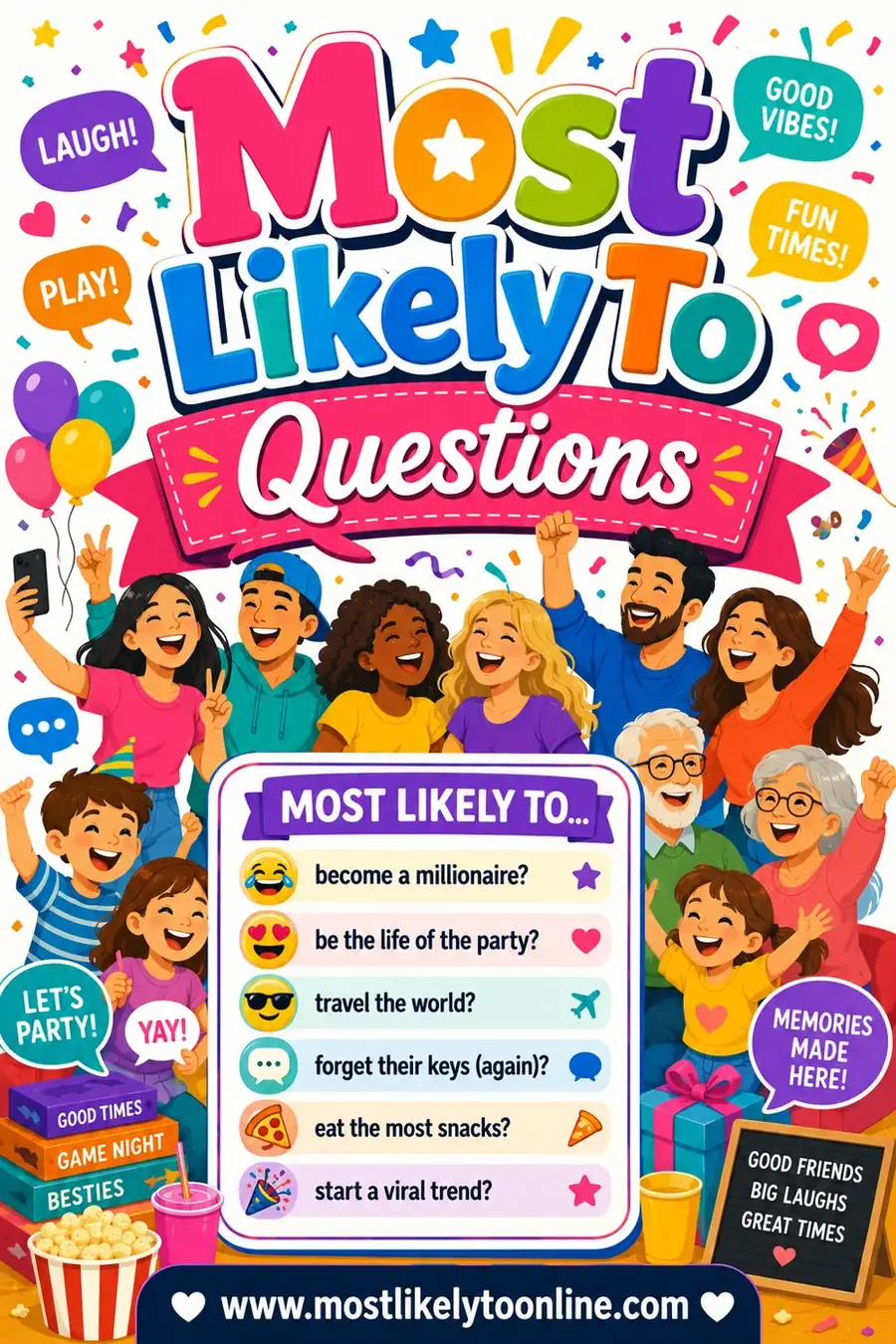
Here's your crowd-pleasing set. Copy these into the game or read them out loud. They're written to work with people who may not all know each other well — light, inclusive, and easy for a big room to react to. Mix categories to keep the energy up.
Party Personalities
- Most likely to know everyone at the party
- Most likely to start the dancing
- Most likely to be the last one to leave
- Most likely to show up fashionably late
- Most likely to keep the whole room laughing
- Most likely to befriend a total stranger
- Most likely to give the best toast
- Most likely to start a conga line
- Most likely to be the life of the party
- Most likely to talk to literally everyone
The Organizers
- Most likely to organize the whole group
- Most likely to plan the next get-together
- Most likely to volunteer to be team captain
- Most likely to start a group chat after tonight
- Most likely to remember everyone's name
- Most likely to make sure no one feels left out
- Most likely to herd everyone for a group photo
- Most likely to keep the schedule on track
- Most likely to bring the snacks everyone loves
- Most likely to send out the invites
Fun & Games
- Most likely to win any group game
- Most likely to be super competitive
- Most likely to challenge someone to a dance-off
- Most likely to come up with a new game
- Most likely to lose gracefully
- Most likely to argue over the rules
- Most likely to celebrate a win the loudest
- Most likely to pick the team that wins
- Most likely to never sit a game out
- Most likely to start a friendly rivalry
The Memorable Ones
- Most likely to take a hundred photos
- Most likely to tell the best story
- Most likely to get everyone singing
- Most likely to have the wildest dance moves
- Most likely to give the best advice all night
- Most likely to make a grand entrance
- Most likely to be quoted for weeks after
- Most likely to start a memorable tradition
- Most likely to have the best laugh
- Most likely to be everyone's favorite
Everyday Crowd Favorites
- Most likely to fall asleep on the couch
- Most likely to go back for thirds at the buffet
- Most likely to lose their phone at the party
- Most likely to know a fun fact about anything
- Most likely to give the best hugs
- Most likely to cheer the loudest for a friend
- Most likely to start a deep conversation
- Most likely to bring a surprise guest
- Most likely to help clean up at the end
- Most likely to suggest going somewhere after
Bonus Rounds
- Most likely to win a costume contest
- Most likely to lead a group toast
- Most likely to make the playlist for the night
- Most likely to keep the party going past midnight
- Most likely to be invited to everything
Best Big-Group Settings
This game adapts to almost any crowd. Here's where it really delivers.
House parties and get-togethers
When the room splits into small clusters, a round of Most Likely To pulls everyone back together. It's the perfect "reset" when energy dips between activities, and it works whether guests know each other or not.
Office parties and team events
It's a low-stress icebreaker for coworkers. Keep prompts about fun, harmless work-party traits — "most likely to win the gift exchange" — and you've got an inclusive activity that gets the team laughing without putting anyone on the spot.
Family reunions
With relatives of every age in one place, Most Likely To bridges the gaps. Cousins, aunts, and grandparents can all join the same round, and the inside-family jokes write themselves.
Youth groups, clubs, and large classes
For organizers wrangling 20 or 30 kids or teens, this is a dream activity. It includes everyone, needs no supplies, and can run as long or short as you need. Our tweens and camp lists pair perfectly here.
Tips for Running It Smoothly with Many People
A big crowd needs a little extra structure. These tips keep a large game fun and fast.
- Use a screen. Project the online game so everyone can read the prompt at once. It saves you shouting.
- Don't count exact votes. With a big room, just eyeball who's getting the most points and name them. Speed beats precision.
- Keep rounds short and punchy. Read, point, name the winner, next. A quick rhythm keeps a big crowd engaged.
- Pick inclusive prompts. With people who don't all know each other, lean on universal traits like "most likely to start the dancing."
- Split into groups if needed. For 40+ people, you can run two games at once and have winners face off in a final round.
Make Your Own Big-Group Prompts
The list above will carry any party, but custom prompts based on your actual crowd get the biggest reactions. Think about the running jokes of your friend group, family, or team. Is one cousin always the photographer? "Most likely to take a hundred photos." Does a coworker always organize everything? "Most likely to plan the next get-together."
A great big-group prompt is broad enough that the room can react fast, harmless enough that being pointed at feels fun, and ideally tied to a shared experience. Crowd-friendly always beats inside-baseball when half the room is new to each other.
Looking for a different vibe? Our deep questions list suits a smaller, closer circle, while the camp and tweens lists are perfect for younger crowds.
Frequently Asked Questions
Is Most Likely To good for big groups?
It's one of the best big-group games out there. It includes everyone at once, needs no equipment, and gets louder and funnier with more people. The free game makes it easy to run with a crowd by drawing prompts and picking winners for you.
How do you play Most Likely To with a lot of people?
Read a prompt loudly, count down, and have everyone point on "one." Just spot who's getting the most fingers and name them — no exact counting needed. Projecting the online game on a screen helps everyone follow along.
How many people can play Most Likely To at once?
There's really no limit. It works with 10, 20, 50, or more. For very large crowds, you can split into two games and have the winners face off in a final round.
What are good Most Likely To questions for a party?
Light, inclusive prompts about party personalities work best — things like "most likely to start the dancing" or "most likely to know everyone at the party." The 50+ questions on this page are all crowd-friendly and copy-paste ready.
Can you play Most Likely To with people who don't know each other?
Yes, and it's a great icebreaker for exactly that. Stick to universal prompts that anyone can react to, and the game helps a room full of strangers warm up and start laughing together fast.
What's the easiest way to run it for a crowd?
Use the free online game: add all the names, project it on a screen, and let it draw prompts and pick winners automatically. That frees you from refereeing a room full of pointing fingers so you can just enjoy the party.
Ready to Get the Whole Room Playing?
Grab a handful of prompts from the list above, open the free Most Likely To game, and add everyone's names. It draws a question and picks who's "most likely" each round, so you can keep a big crowd laughing without breaking a sweat. It's free, needs no sign-up, and it's built for groups of any size. Let the party begin!