Most Likely To for Team Building: Questions & How to Run It
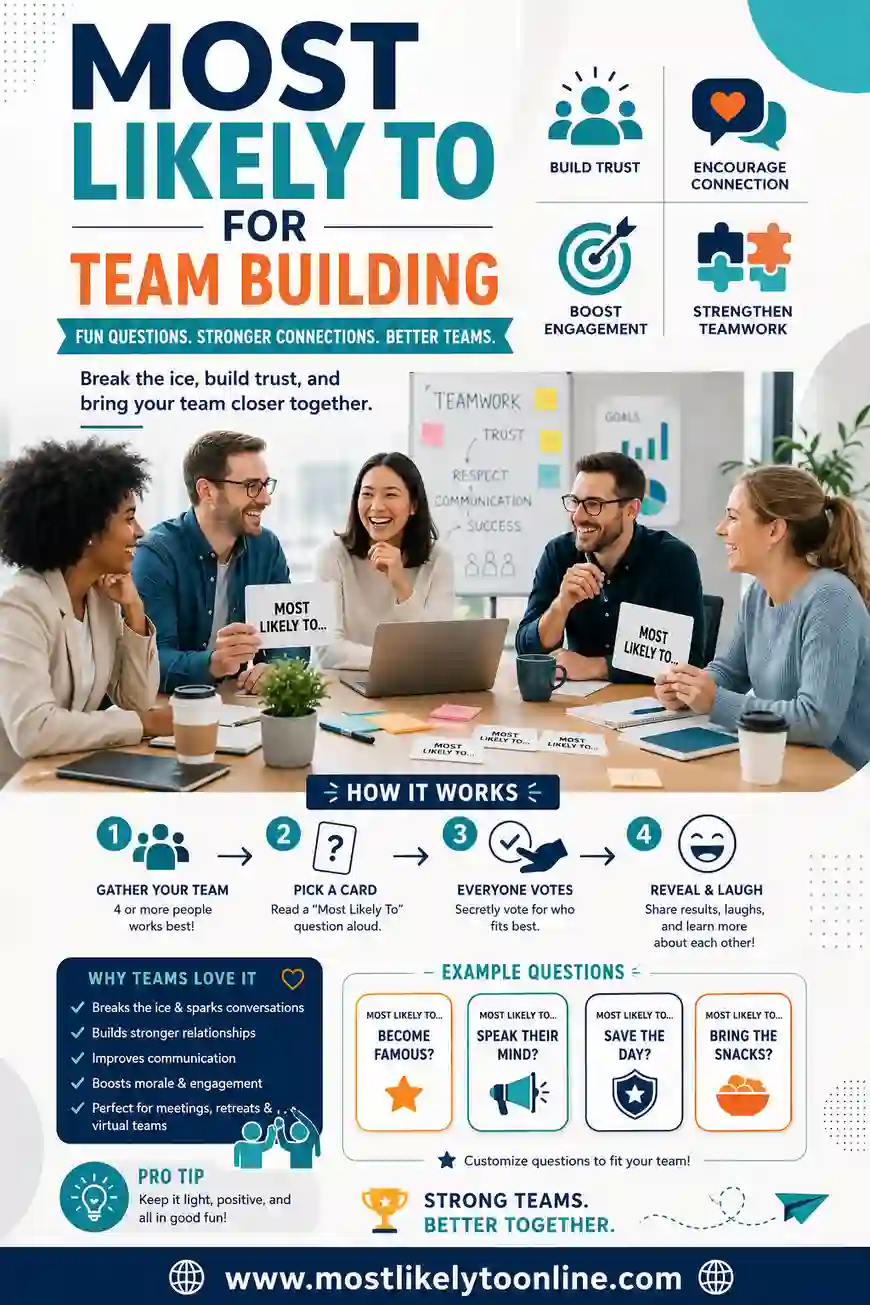
Most Likely To is one of the easiest team-building games you can run: read a "Most likely to…" prompt, have teammates vote for who fits it best, and watch the laughs and conversation flow. It needs no prep, works in person or over video, and helps coworkers see each other as people, not just job titles. This guide gives you work-friendly questions, setup steps, and tips for keeping it inclusive.
Want to run it right now? Open the free Most Likely To game, add your teammates' names, and it reads the prompts and picks for you, perfect for a quick team warm-up with zero prep.
Why Most Likely To Works for Team Building
Team-building games often flop because they feel forced. Most Likely To avoids that trap. It's quick, low-pressure, and genuinely funny, so people relax instead of bracing for an awkward exercise.
It also does real work under the hood. When teammates vote on who's "most likely to keep the meeting on time" or "bring snacks," they're sharing how they see each other. Those small reveals build familiarity and trust faster than any trust fall ever could.
Best of all, it fits into a busy schedule. You can run a five-minute version at the start of a meeting or a longer session at a retreat. No supplies, no setup, no cost.
What Makes It Great for Work
A few specific traits make Most Likely To a strong fit for the workplace.
- It's fast. A meaningful round takes five to ten minutes.
- It's inclusive. Everyone votes by pointing or clicking, so nobody has to perform.
- It scales. Works for a team of four or a department of forty.
- It's remote-friendly. Plays perfectly over video calls with hands-up voting.
- It's free. No budget approval needed.
For a quick warm-up specifically, our icebreaker guide shows how to use these questions to open a meeting smoothly.
How to Run It with Your Team
Here's a simple, repeatable format that works for any team.
- Set the tone. Tell the team it's a light, just-for-fun game, no right answers and nothing on the record.
- Choose a reader. A manager or rotating teammate reads each prompt aloud.
- Read a work-friendly prompt. For example, "Who's most likely to reply to emails the fastest?"
- Vote together. In person, point on three. On video, raise hands or drop a name in the chat.
- React and move on. Let the picked person laugh or defend themselves, then go to the next prompt.
- Wrap up on a high note. Five to ten rounds is plenty for a warm-up; a retreat session can go longer.
Keep it breezy. The goal is connection and a few laughs, not competition.
Running it remotely
For distributed teams, the format barely changes. Share the online game on a screen share, or have one person read prompts aloud. Use chat-based voting so everyone's pick is visible, and call on quieter teammates by name so they get included. Our Zoom parties guide has more remote-play tips.
Keep It Work-Appropriate
The one rule that matters most: keep every prompt positive and professional. Team building should make people feel good about each other, not exposed.
- Aim at strengths and quirks, not flaws. "Most likely to give great advice" beats anything that could embarrass someone.
- Avoid anything personal or sensitive. Skip prompts about appearance, relationships, or performance.
- Keep it opt-in. Let anyone pass on a round without explanation.
- Read the room. If a prompt might single out one person uncomfortably, skip it.
Done right, every round leaves the picked person smiling. That's the bar.
50 Team-Building Questions (Copy & Paste)
Here's a clean, office-friendly list. Copy the whole thing or pick the ones that fit your team.
- Most likely to reply to emails the fastest
- Most likely to bring snacks to a meeting
- Most likely to suggest a coffee break
- Most likely to win employee of the month
- Most likely to plan the team lunch
- Most likely to know the best lunch spot
- Most likely to keep the meeting on time
- Most likely to have the tidiest desk
- Most likely to volunteer for a new project
- Most likely to remember everyone's birthday
- Most likely to crack a joke in a meeting
- Most likely to take the most notes
- Most likely to fix the printer
- Most likely to start a fun work tradition
- Most likely to mentor a new hire
- Most likely to celebrate a teammate's win
- Most likely to have the best desk setup
- Most likely to send the funniest GIF in chat
- Most likely to organize the team outing
- Most likely to stay calm under a deadline
- Most likely to ask a great question
- Most likely to know a useful keyboard shortcut
- Most likely to bring homemade treats
- Most likely to give a great presentation
- Most likely to spot a typo before it ships
- Most likely to cheer up the team on a tough day
- Most likely to suggest a better way to do something
- Most likely to remember a small detail from last week
- Most likely to volunteer to take notes
- Most likely to be early to every meeting
- Most likely to have a tidy inbox
- Most likely to learn a new tool fast
- Most likely to recommend a great book or podcast
- Most likely to keep a plant alive at their desk
- Most likely to plan ahead for everything
- Most likely to share credit with the team
- Most likely to bring the energy on a Monday
- Most likely to have the best video-call background
- Most likely to know where to find any file
- Most likely to welcome a new teammate first
- Most likely to suggest a team-building game
- Most likely to keep notes for the whole team
- Most likely to spot a problem early
- Most likely to make the office coffee
- Most likely to start a healthy habit at work
- Most likely to give honest, kind feedback
- Most likely to remember a coworker's coffee order
- Most likely to lead a brainstorm
- Most likely to keep the team chat lively
- Most likely to thank a teammate publicly
Looking for more workplace sets? See our work and office questions and coworker questions.
When to Use It
Most Likely To slots into more moments than you'd think.
| Moment | Why it fits |
|---|---|
| Start of a meeting | Warms up the room in five minutes |
| New-hire onboarding | Helps a newcomer learn personalities fast |
| Team retreat | A light break between sessions |
| Remote stand-up | Adds connection to a video call |
| After a big push | A fun way to decompress as a team |
The shorter formats are great for weekly use, while a longer session works for retreats or quarterly get-togethers.
Tips for the Best Team Session
Small touches make the game land better at work.
- Manager goes first sometimes. When a leader laughs at being "most likely to lose track of time in a brainstorm," it signals the game is safe and fun.
- Mix in genuine compliments. Prompts like "most likely to help a teammate" double as a quiet morale boost.
- Keep it short. Five to ten rounds respects everyone's time and leaves them wanting more.
- Rotate the reader. Letting different people read spreads ownership and keeps energy fresh.
- End with a thank-you. Close by thanking the team for playing along. It's a small, warm note to finish on.
Frequently Asked Questions
Is Most Likely To good for team building?
Yes. It's quick, inclusive, and genuinely fun, which helps coworkers relax and see each other as people. Voting on light prompts reveals how teammates view one another and builds familiarity without any pressure or prep.
What questions are appropriate for a work team?
Stick to positive, professional prompts about strengths and harmless quirks, like "most likely to reply to emails fastest" or "most likely to bring snacks." Avoid anything about appearance, relationships, performance, or anything that could embarrass someone.
Can you play Most Likely To with a remote team?
Absolutely. Share the online game on a screen share or have one person read prompts aloud. Use hands-up or chat-based voting so everyone's pick is visible, and call on quieter teammates by name to include them.
How long should a team-building session last?
Five to ten minutes is ideal for a meeting warm-up, which is about five to ten prompts. For a retreat, you can run a longer session. Keep it short enough that people leave wanting more rather than checking the clock.
How many people can play?
Anywhere from four to forty or more. Small teams point or vote directly; large groups use hands-up voting or split into teams. The free tool handles any group size and picks for you.
Do we need to keep score?
No. For team building, no-score play keeps the focus on connection and laughs rather than competition. If your team enjoys a little rivalry, a quick tally is fine, but it's optional.
Bring Your Team Together
Most Likely To turns five spare minutes into a real team moment, laughs, connection, and a glimpse of how your coworkers see each other. Grab a few work-friendly prompts, open the free Most Likely To game, add your team's names, and let it run. It's free, there's no sign-up, and it's the easiest team-building win on your calendar.