Most Likely To vs Would You Rather: Which to Play?
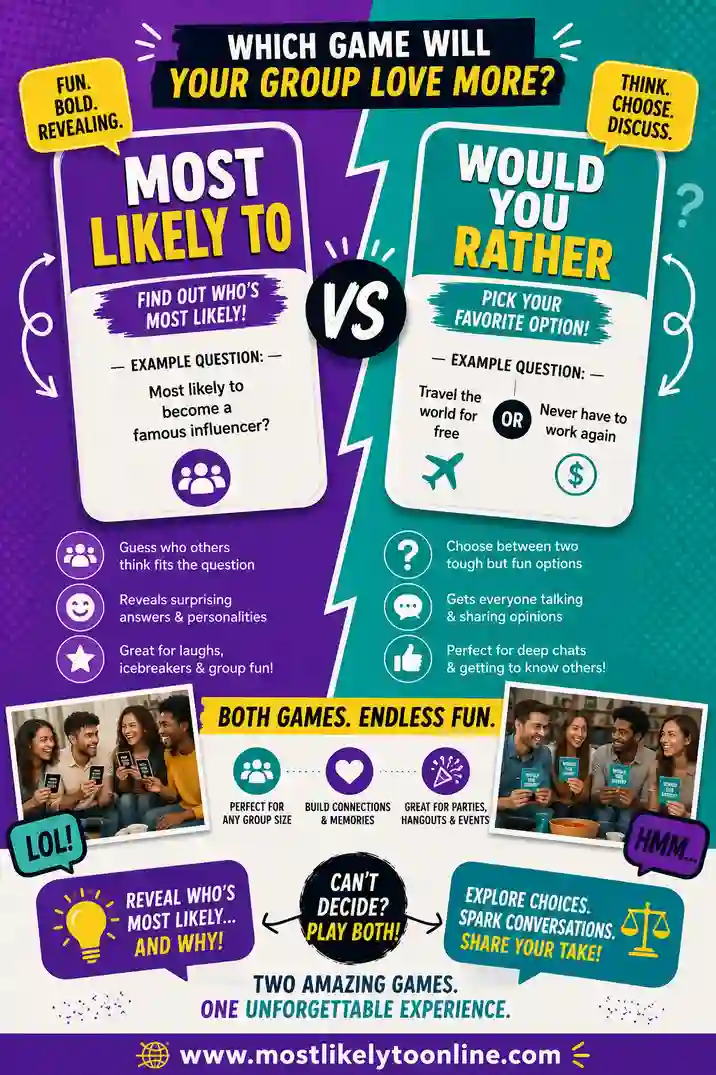
Most Likely To and Would You Rather are both classic no-supplies group games, but they ask very different questions. Most Likely To points at your friends: you read a prompt like "Most likely to become a millionaire," and everyone votes on who fits. Would You Rather asks you to choose between two options, like "Would you rather fly or be invisible?" If you want a fast, teasing, vote-on-your-group game, Most Likely To wins. If you love debates and impossible choices, Would You Rather is the one.
Want to try the group-voting game right now? Open the free Most Likely To game, drop in your friends' names, and it picks who's "most likely" each round. No sign-up, no cards, nothing to install. Below is a full side-by-side so you can pick the right game for tonight.
The Quick Answer
Both games are free, need zero gear, and run on nothing but a group of people. The difference is what you're actually doing each turn.
- Most Likely To is about people. You guess which friend is "most likely" to do something. It's playful and teasing, and it leans on the personalities in the room.
- Would You Rather is about choices. You pick between two options and defend your call. It sparks debate and reveals how people think.
If your crowd loves friendly ribbing and reacting to each other, Most Likely To delivers laughs faster. If they love arguing over hypotheticals and weird dilemmas, Would You Rather keeps them talking for hours.
How Most Likely To Works
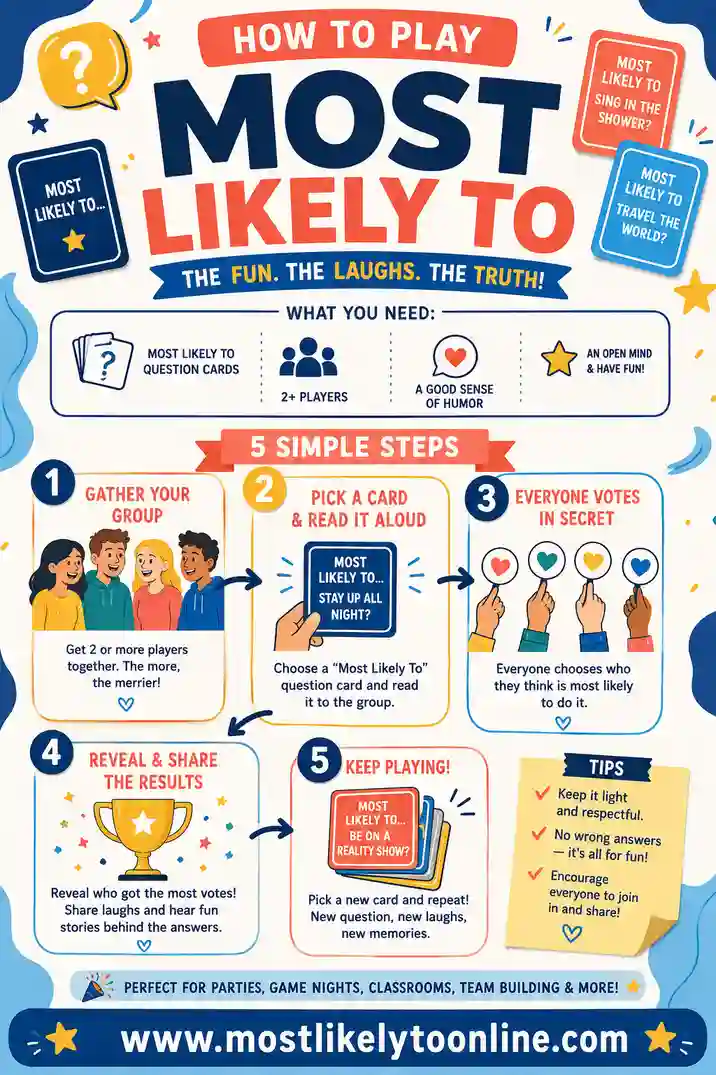
The rules fit in one breath. Someone reads a prompt that starts with "Most likely to," then everyone points at or names the friend they think fits best. The most-voted person takes the round.
A clean game runs like this:
- Gather your group. Three is enough; ten is great.
- Read a prompt. Like "Most likely to become famous" or "Most likely to trip on flat ground."
- Everyone votes. Point on three, or shout the name.
- The most-named person wins the round. Laugh, react, next.
You can read prompts off a phone, or let a free generator serve them up and even pick a random winner for you. The energy comes from the group reacting to each other, so it gets rowdy fast with a big crew.
How Would You Rather Works
Would You Rather hands you a fork in the road every turn. A player poses two options, and everyone has to choose one, ideally explaining why.
A typical round:
- One person asks. "Would you rather have unlimited pizza or unlimited tacos?"
- Everyone picks a side. No fence-sitting allowed.
- People defend their choice. This is where the fun lives.
- Move on to the next dilemma. Sometimes you keep score, often you don't.
There's no single "winner" in the classic version. The payoff is the debate: the wilder the two options, the better the argument. It rewards creativity and quick thinking more than knowing your friends.
Side-by-Side Comparison
Here's the fast version for deciding right now.
| Feature | Most Likely To | Would You Rather |
|---|---|---|
| What you do | Vote on a friend | Choose between two options |
| Focus | People in the room | Hypothetical dilemmas |
| Setup | None | None |
| Best group size | 3–12 | 2–12 |
| Vibe | Playful, teasing | Debate-y, thoughtful |
| Needs to know each other | Helps a lot | Not really |
| Keeps a "winner" | Yes (most-voted) | Usually no |
| Great for two people | Works, but lighter | Excellent |
| Plays on a phone | Yes, with a free tool | Usually read aloud |
Neither is "better." Most Likely To trades on personalities and reactions. Would You Rather trades on imagination and argument. Pick based on whether your group would rather tease each other or debate each other.
When to Pick Most Likely To
Reach for Most Likely To when you want the room laughing at each other in a good-natured way. It's the right call for:
- Groups that know each other. The teasing lands best when you know who'd really fall asleep first at the party.
- Icebreakers with a crowd. Voting on light prompts loosens people up fast.
- Big groups. Ten people voting at once is loud, fun chaos.
- Energy boosts. When a hangout is dragging, a few quick rounds wake everyone up.
Because it spotlights the people present, it builds inside jokes on the spot. That's something Would You Rather can't quite do.
When Would You Rather Fits Better
Would You Rather has its own sweet spots:
- Two people. It's one of the best games for just a pair, since you don't need a crowd to vote.
- Strangers. You don't have to know anyone to weigh in on flying versus invisibility.
- Long, slow conversations. A great dilemma can fuel twenty minutes of back-and-forth.
- Car rides and waits. Like Most Likely To, it needs nothing but talking.
If your group loves to argue for sport, Would You Rather will be the hit of the night.
You Don't Have to Choose
The smartest move is to keep both ready. They balance each other in a single session.
- Open with Most Likely To. Use it to warm up a group and spark some laughs.
- Switch to Would You Rather when conversation lulls or you want something more thoughtful.
- Alternate to keep energy fresh. Loud, teasing rounds and slower, debate-y rounds make a nice rhythm.
Many of the best game nights aren't one game at all. They're a mix, and these two complement each other almost perfectly.
Sample Prompts for Each Game
Lining them up shows the difference instantly. Most Likely To asks you to size up a friend; Would You Rather asks you to make a call.
Most Likely To (vote on a friend):
- Most likely to become a movie star
- Most likely to forget an important date
- Most likely to win a road trip trivia game
- Most likely to start a conga line
- Most likely to adopt a stray animal
- Most likely to get lost with a map in hand
- Most likely to plan the entire group vacation
- Most likely to laugh at a funeral
- Most likely to fall asleep mid-movie
- Most likely to text the wrong group chat
Would You Rather (pick one):
- Would you rather be able to fly or be invisible?
- Would you rather always be ten minutes late or twenty minutes early?
- Would you rather give up pizza or give up ice cream?
- Would you rather read minds or see the future?
- Would you rather live without music or without movies?
Notice the shift. Most Likely To prompts make you look around the room. Would You Rather prompts make you look inward and pick a lane. That's the whole difference in feel.
Which Game Wins for Each Situation
Still on the fence? Here's a quick cheat sheet for matching the game to your night.
- First hangout with new people: Most Likely To. The voting is light, and it builds quick laughs without putting anyone on the spot.
- Just two of you: Would You Rather. No crowd needed, and the debates carry a whole evening.
- Family game night: Either works clean, but Most Likely To gets the biggest reactions across ages.
- Long car ride: Would You Rather for the slow stretches, Most Likely To when energy dips.
- Big, rowdy party: Most Likely To. A dozen people voting at once is pure chaos in the best way.
- Deep, late-night talk: Would You Rather. The right dilemma leads somewhere surprisingly meaningful.
The honest takeaway is that you can't go wrong. Both are free, both need nothing, and both have kept people laughing for years. If you want the one that gets a group going fastest, start with Most Likely To and keep Would You Rather in your back pocket.
Keeping Either Game Clean
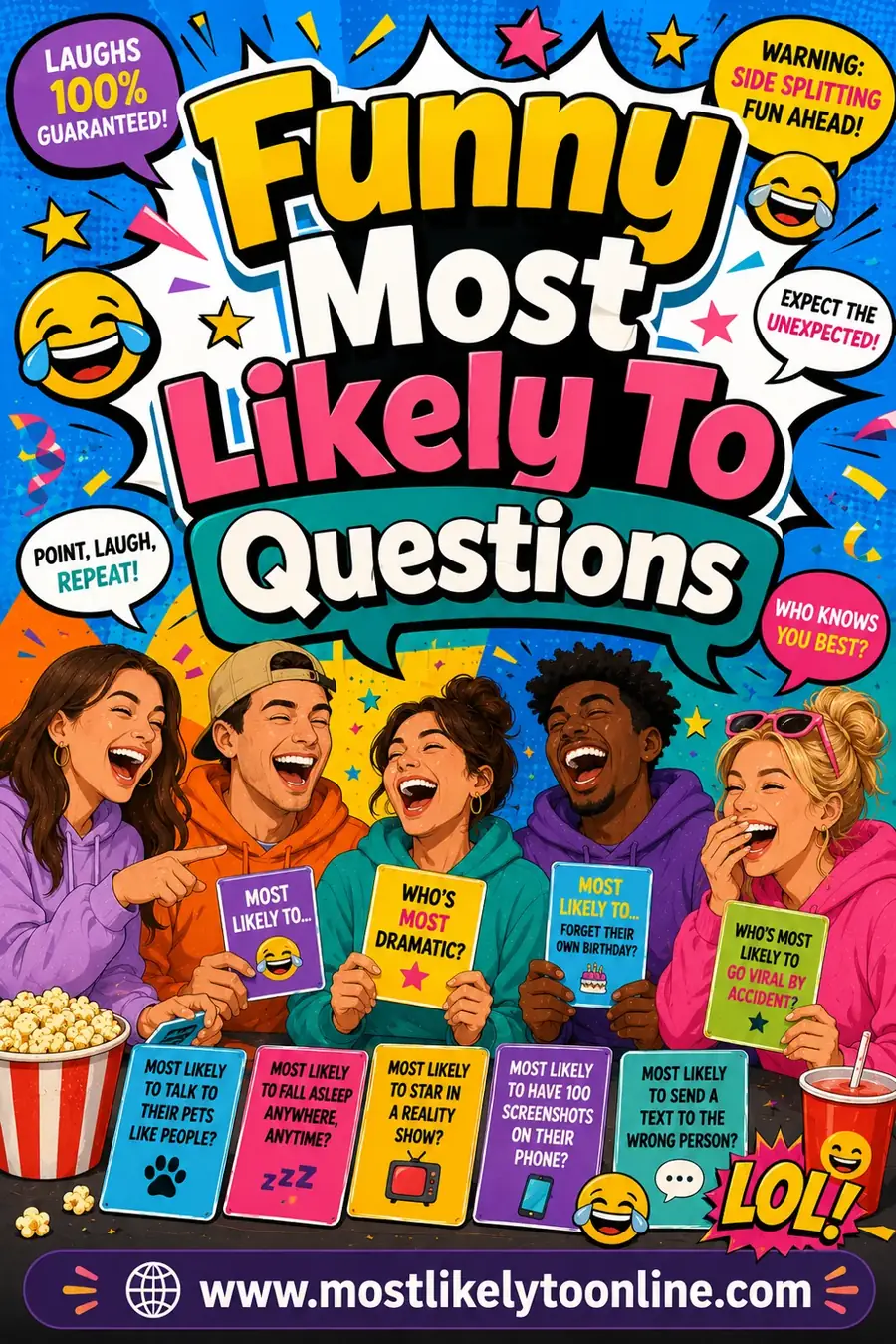
Both games have edgier versions online, but you never need them. A clean prompt list opens the game to everyone, including families, classrooms, and youth groups. Most Likely To is especially easy to keep PG, since it only ever asks you to guess. If you want ready-made wholesome material, the funny Most Likely To questions list is copy-paste ready and family-friendly.
Frequently Asked Questions
Is Most Likely To or Would You Rather better for two people?
Would You Rather is the better two-player game. Most Likely To leans on a group voting, so with only two people it loses some of its energy. Would You Rather works perfectly for a pair since you just trade dilemmas back and forth.
Which game is better for a big group?
Most Likely To shines with big groups. Ten or fifteen people all voting at once creates loud, fun energy. Would You Rather still works, but the back-and-forth debate can slow down once the group gets very large.
What do you need to play either game?
Just people. Both are no-equipment classics. For Most Likely To you can use a free online tool to draw prompts and pick a random winner, while Would You Rather is usually spoken aloud, though prompt lists help.
Can kids play both games?
Yes, with clean prompts both are great for kids. Most Likely To keeps things light by design, and Would You Rather is easy to fill with silly, age-appropriate choices like "fly or be invisible."
Can you combine the two games?
Definitely. Start with Most Likely To to warm everyone up, then switch to Would You Rather when you want deeper debate. Alternating the two keeps a game night from getting stale.
Which game sparks more debate?
Would You Rather sparks more debate by design, since players defend opposite choices. Most Likely To creates more teasing and reactions but less arguing, because the group usually agrees pretty quickly on who fits a prompt.
Ready to Play?
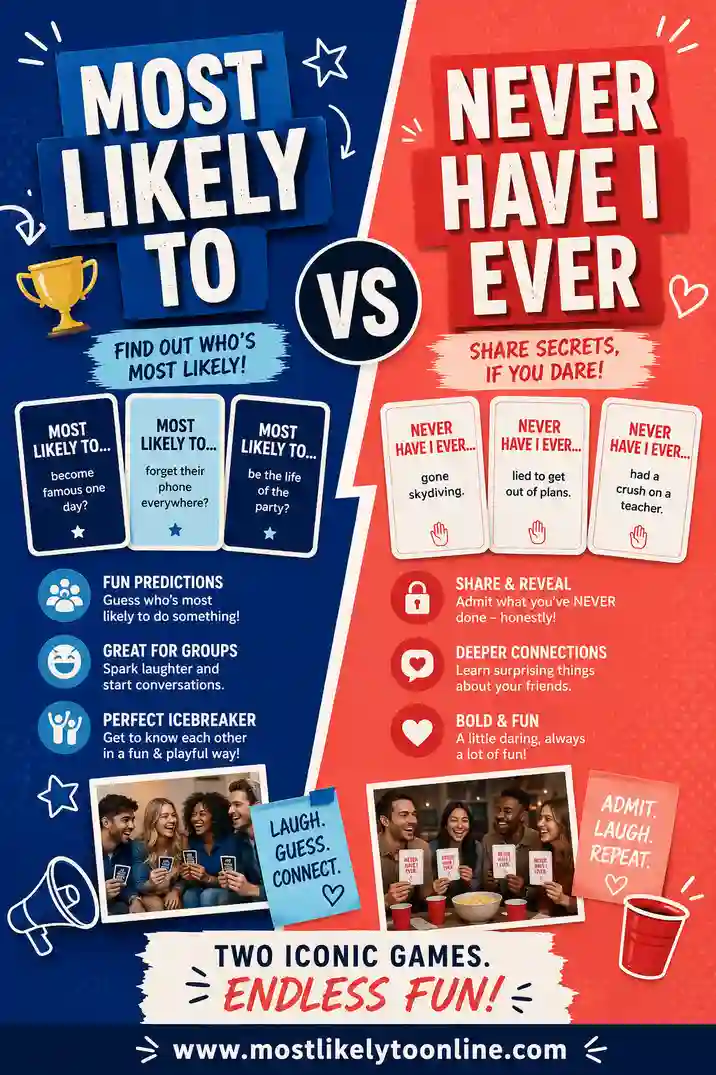
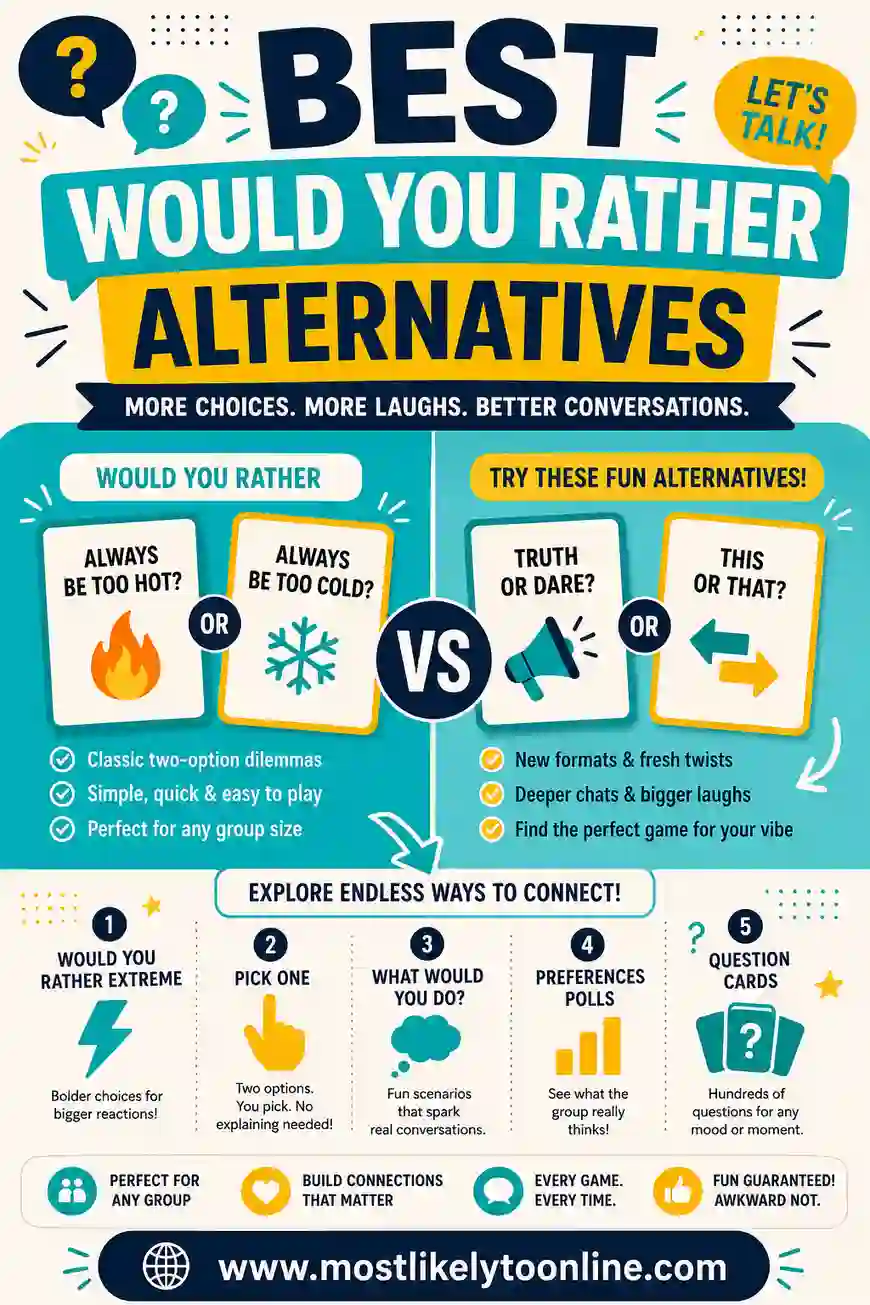
If you want a game that gets your crew laughing at each other within a minute, Most Likely To is the pick. Open the free Most Likely To generator, add your friends' names, and start drawing prompts in seconds. It's free, there's no sign-up, and it runs on any phone. Curious about another matchup? Read Most Likely To vs Never Have I Ever, learn how to play Most Likely To, or browse the best Would You Rather alternatives.