Most Likely To for Bible Study
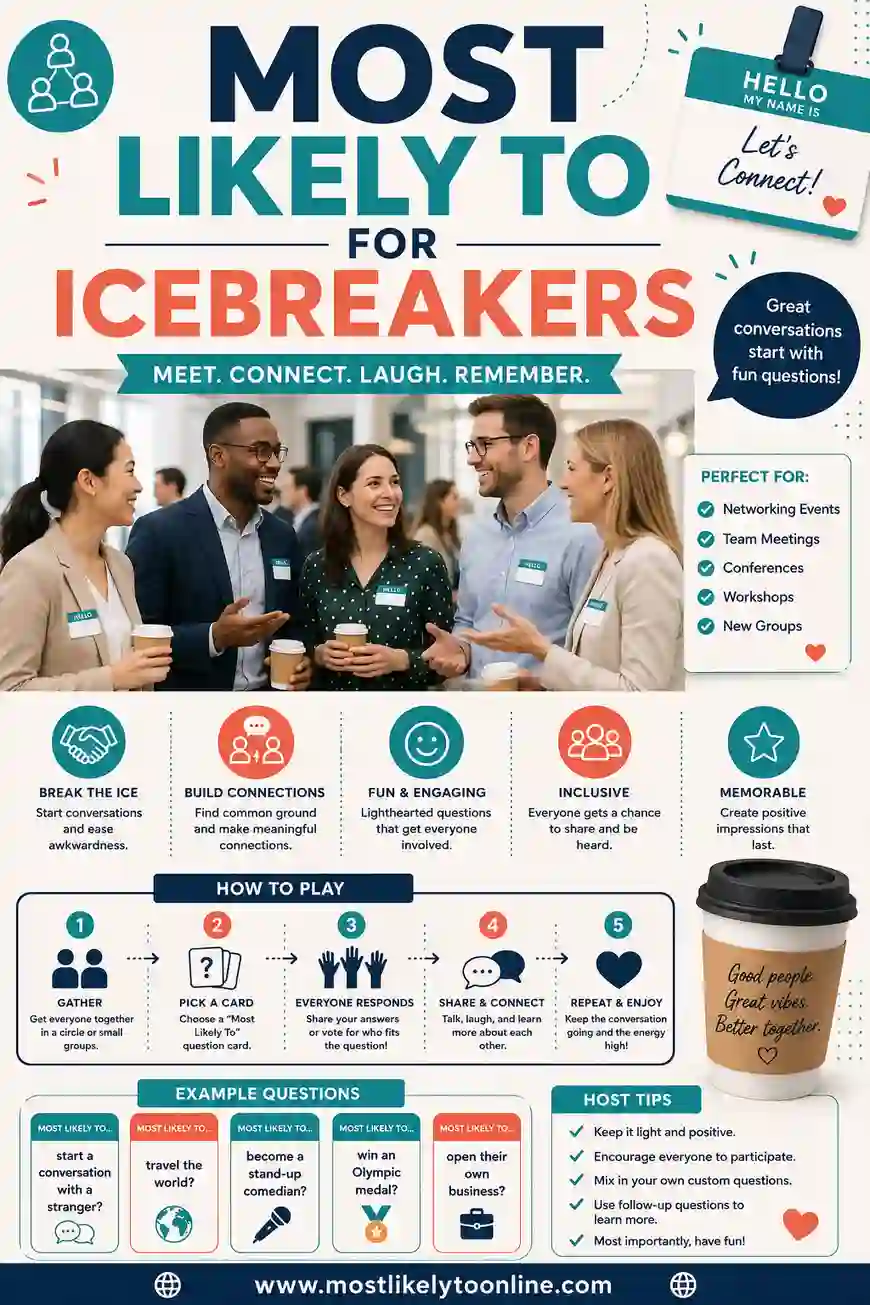
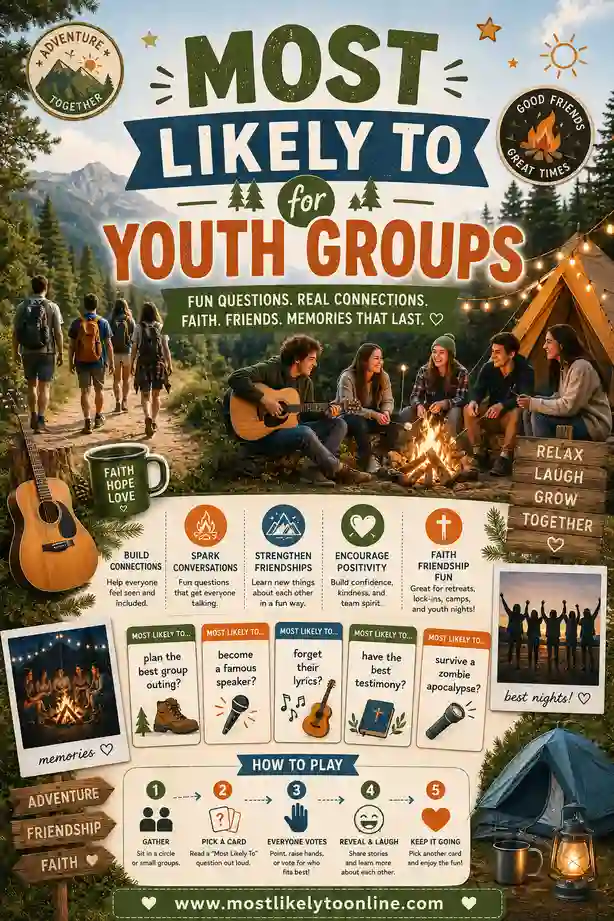
Most Likely To for Bible study is a gentle, encouraging icebreaker where group members point to the person "most likely to" do something kind, faithful, or relatable, like "most likely to bring snacks for everyone" or "most likely to text a friend a verse when they're down." You read a prompt, everyone points, and instead of roasting, you celebrate what's true and good about each other. It's a warm, no-supplies way to open or close a small-group gathering.
Want to use it tonight? Open the free Most Likely To generator, add your group members' names, and it'll deal out wholesome questions one at a time. No app, no sign-up, nothing to print, just tap and let the encouragement flow.

Why Most Likely To Works for a Bible Study Group
Small groups thrive when people feel seen and at ease. A good icebreaker breaks down walls before the deeper conversation begins, and Most Likely To does that in about two minutes. There's no pressure to share something heavy and no awkward "go around the circle" silence. You just point, laugh, and warm up together.
What makes the faith-based version special is the angle. Instead of teasing people for their flaws, you point out the good. Who's the encourager? Who always brings the snacks? Who remembers everyone's prayer requests? The game turns into a quiet round of affirmation, and that sets a beautiful tone for whatever comes next.
It's also genuinely flexible. Use it to open a study, fill the gap while latecomers arrive, or close on a high note. It needs nothing but a phone and a group that's glad to be together.
Keeping It Wholesome and Encouraging
The whole spirit of this version is "build up, don't tear down." That one shift changes everything. Here's how to keep it that way.
Point to celebrate, not to roast
In the party version of Most Likely To, getting pointed at means a friendly roast. In a Bible study, flip it. When the group points to someone for "most likely to encourage a stranger," that's a compliment. Let people say a quick "yeah, that's totally you because..." so the affirmation lands.
Keep prompts kind and relatable
Stick to qualities a group would be glad to be known for: generosity, faithfulness, humor, hospitality. Sprinkle in a few lighthearted, relatable ones too, like "most likely to have a worship song stuck in their head," so it stays fun and never preachy.
Make room for everyone
Some people are shy in new groups. The beauty of pointing is that nobody has to speak unless they want to. A quiet member can fully take part just by pointing and smiling. For a youth-focused crowd, our youth-groups edition has prompts pitched a little younger.
How to Play Most Likely To in a Small Group
You can explain it in under a minute. Here's the flow.
- Gather the group. Four to twelve people is ideal for a study.
- Read a prompt out loud. Something like "Most likely to bring snacks for everyone."
- Point on three. Everyone aims at the person they think fits best.
- Celebrate it. The person with the most points gets a warm "that's so you," and can share a quick story if they like.
- Keep it gentle. A few rounds is plenty to warm up. You don't need to play long.
It needs no table and no supplies, so it works in a living room, a church classroom, or a coffee shop corner.
A few simple ground rules
- Affirm, don't embarrass. The goal is to help people feel known and valued.
- Pointing is enough. Nobody has to explain or perform. Quiet participation counts.
- Read the room. Two or three rounds before a study; a few more if it's a social night.
50 Most Likely To Questions for Bible Study (Copy & Paste)
Here's a big, ready-to-use list of wholesome prompts. Drop them all into the generator, or read straight from your phone. Every one is clean, encouraging, and small-group friendly.
The encouragers
- Most likely to text a friend an encouraging verse.
- Most likely to check in on someone all week.
- Most likely to give the most thoughtful advice.
- Most likely to remember everyone's prayer requests.
- Most likely to offer to pray out loud first.
- Most likely to send a "thinking of you" note.
- Most likely to encourage a total stranger.
- Most likely to notice when someone's having a hard day.
- Most likely to write the kindest birthday message.
- Most likely to always have the right word at the right time.
The helpers & hosts
- Most likely to bring snacks for everyone.
- Most likely to show up early to help set up.
- Most likely to stay late to clean up.
- Most likely to start the carpool every week.
- Most likely to host the group at their place.
- Most likely to volunteer before being asked.
- Most likely to bring an extra chair just in case.
- Most likely to make coffee for the whole group.
- Most likely to keep everyone's water glass full.
- Most likely to remember to bring the supplies.
The relatable & fun
- Most likely to have a worship song stuck in their head.
- Most likely to keep the group laughing.
- Most likely to share a story that fits perfectly.
- Most likely to lose their place in the passage.
- Most likely to highlight half the page.
- Most likely to have a very well-worn Bible.
- Most likely to bring up the snack table mid-study.
- Most likely to have three Bible apps on their phone.
- Most likely to quote the verse slightly wrong.
- Most likely to take notes on everything.
The growers & seekers
- Most likely to ask the deep question.
- Most likely to want to keep talking after time's up.
- Most likely to look up the answer right away.
- Most likely to share what they learned during the week.
- Most likely to memorize a verse without trying.
- Most likely to start a new reading plan.
- Most likely to journal about the study after.
- Most likely to bring a topic to dig into.
- Most likely to connect the lesson to real life.
- Most likely to gently challenge the group to grow.
The welcomers
- Most likely to invite a new person to join.
- Most likely to make a newcomer feel at home.
- Most likely to learn everyone's name first.
- Most likely to bring a friend next time.
- Most likely to sit by someone new.
- Most likely to follow up with a visitor.
- Most likely to organize a group hangout outside study.
- Most likely to plan a service project for the group.
- Most likely to keep the group chat going all week.
- Most likely to make sure no one feels left out.
Add a couple of prompts about your own group's quirks and you'll get the warmest laughs of the night.
Ways to Use It in Your Group
One quick round is great. A few small touches make it even better.
- Open with it. Play two or three rounds to loosen everyone up before the lesson.
- Tie it to a theme. Studying the fruit of the Spirit? Use prompts about kindness, patience, and joy.
- Close on a high note. End the night by affirming each other, then pray together.
- Mix in more clean games. Roll into our wholesome edition or use it as a plain icebreaker for new members.
If you ever need a guaranteed-clean set for any setting, our clean PG edition keeps every prompt family-friendly.
Making New Members Feel at Home
One of the quietest gifts this game gives a small group is an easy on-ramp for newcomers. Walking into a Bible study where everyone already knows each other can feel intimidating. A few rounds of Most Likely To changes that fast.
It takes the pressure off
A new person doesn't have to share a story, answer a hard question, or pray out loud on their first night. They just point and laugh along with everyone else. That low bar is exactly what a nervous visitor needs. By the time the actual study starts, they've already been part of something fun with the group, and the walls have come down.
It helps people learn names
When you point at someone, you usually say their name. Run a few rounds and a newcomer picks up half the group's names without anyone making a big formal "let's go around and introduce ourselves" moment. That natural learning is far more comfortable than being put on the spot.
You can even lean into it. Use a prompt like "most likely to learn everyone's name first," and the group will probably point at whoever's best at it, which is a gentle nudge for that person to help the new member feel known.
It signals the group's heart
Because this version celebrates rather than roasts, a visitor watches the group affirm each other for kindness, generosity, and faithfulness. In just a few minutes they get a clear picture of what this group values. That's a powerful first impression, and it tells a newcomer they've landed somewhere safe and warm.
Pairing the Game With Your Study
Most Likely To is an opener, not the main event, and a little intention makes it serve the night well.
- Connect it to the lesson. If you're studying a passage about serving others, the helper and host prompts set the theme before you even open the Bible.
- Keep it short and sweet. Two or three rounds is the sweet spot. The point is to warm up, not to fill the whole hour.
- End with prayer. After a round of affirming each other, transitioning into prayer feels natural. The group is already in a grateful, encouraging frame of mind.
- Let it close the night, too. Some groups like to end with one round, sending everyone home on a high note of laughter and encouragement.
Frequently Asked Questions
What is Most Likely To for Bible study?
It's a gentle icebreaker where group members point to the person "most likely to" do something kind or relatable, like "most likely to bring snacks" or "most likely to encourage a friend." Instead of roasting, the group celebrates the good in each other, which sets a warm tone for the study.
Is it appropriate for a church small group?
Yes. Every prompt in this version is wholesome and encouraging, designed to build people up rather than tease them. It's a safe, easy way to help a group connect before deeper conversation.
How long does it take to play?
Just a few minutes. Two or three rounds is usually enough to warm everyone up. You can play longer on a social night, but it's meant to be a quick, friendly opener.
Do shy or new members have to talk?
No. The beauty of the game is that pointing is enough, no one has to speak or explain. A quiet or new member can fully take part just by joining in the pointing.
Do I need to print anything?
No. Just open the free generator, add your group's names, and play from a phone. There's nothing to download or print, though you can read the copy-paste list aloud if you prefer.
Can I use this with a youth group?
Yes, though for a younger crowd you may want simpler, more playful prompts. Our youth-groups edition is built with that audience in mind.
Ready to Play?
Gather your small group, open the free Most Likely To generator, and let the encouraging questions go around the circle. It's free, there's no sign-up, and it turns those first few minutes into a warm, connecting moment before you dig into the Word. Here's to a group that feels known, valued, and glad to be together.