Most Likely To for Classrooms: Teacher's Guide & Questions
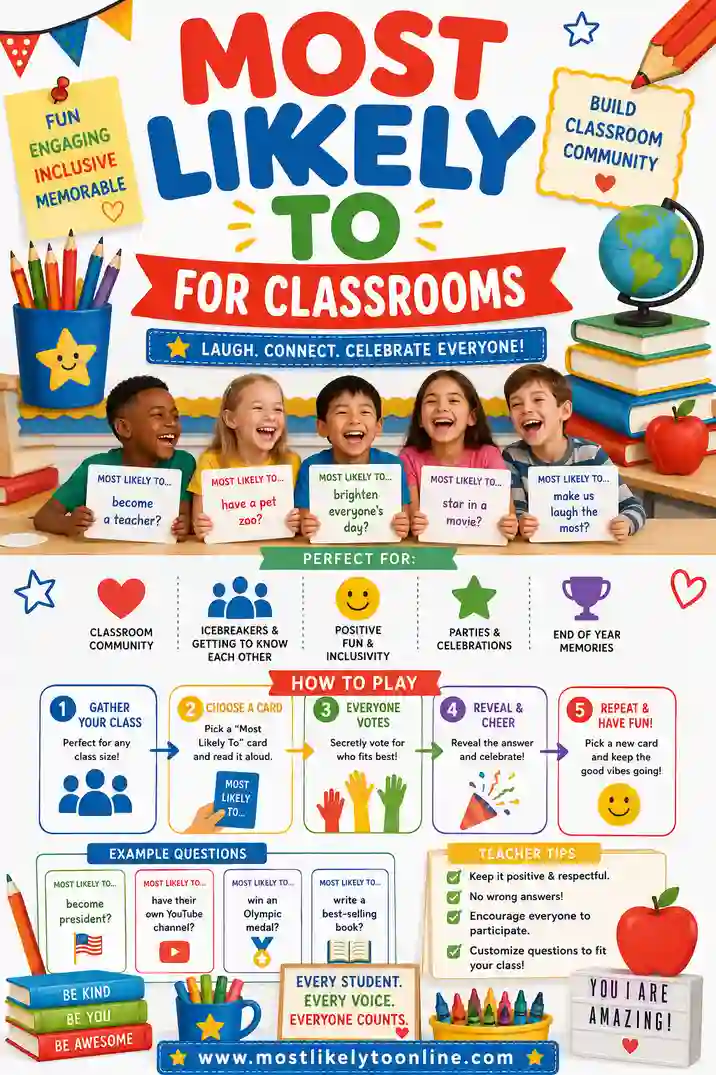
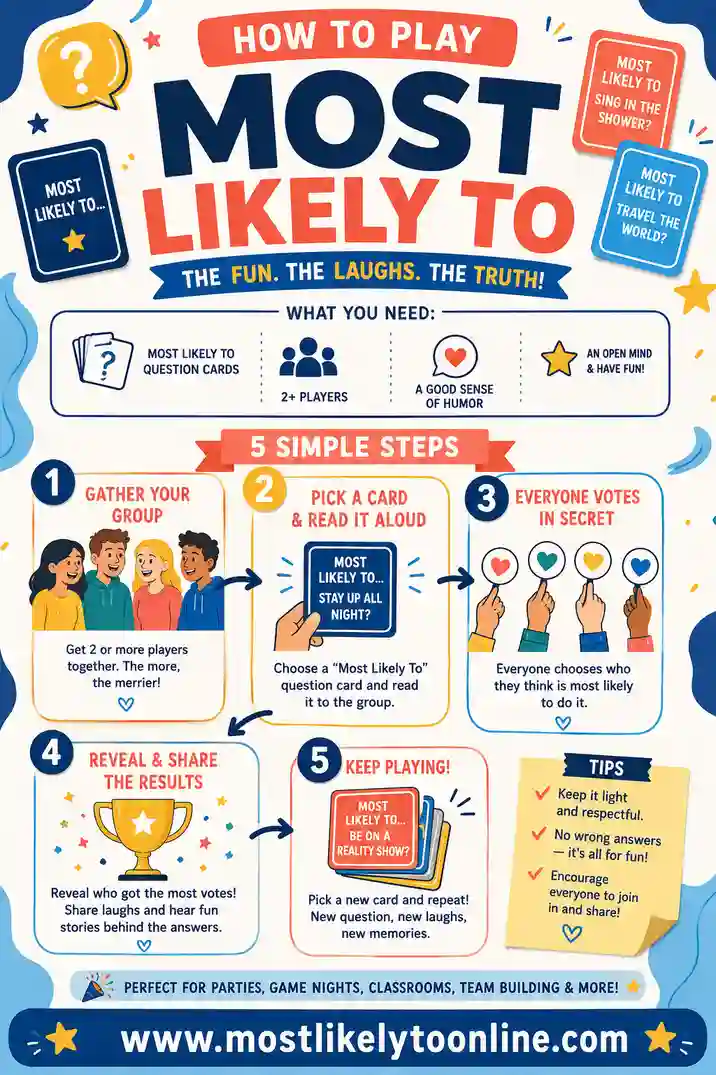
Most Likely To is a quick, no-prep classroom game where you read a "Most likely to…" prompt and students vote for the classmate who fits it best. Used kindly, it builds connection, breaks the ice on day one, and gives students a fun brain break, all in five minutes with zero materials. This teacher's guide covers school-safe questions, setup for any grade, and tips to keep every round positive.
Need it ready to go? Open the free Most Likely To game, type in your students' names, and it handles the questions and the picking, so you can run a quick, classroom-friendly round without any prep.
Why Most Likely To Belongs in the Classroom
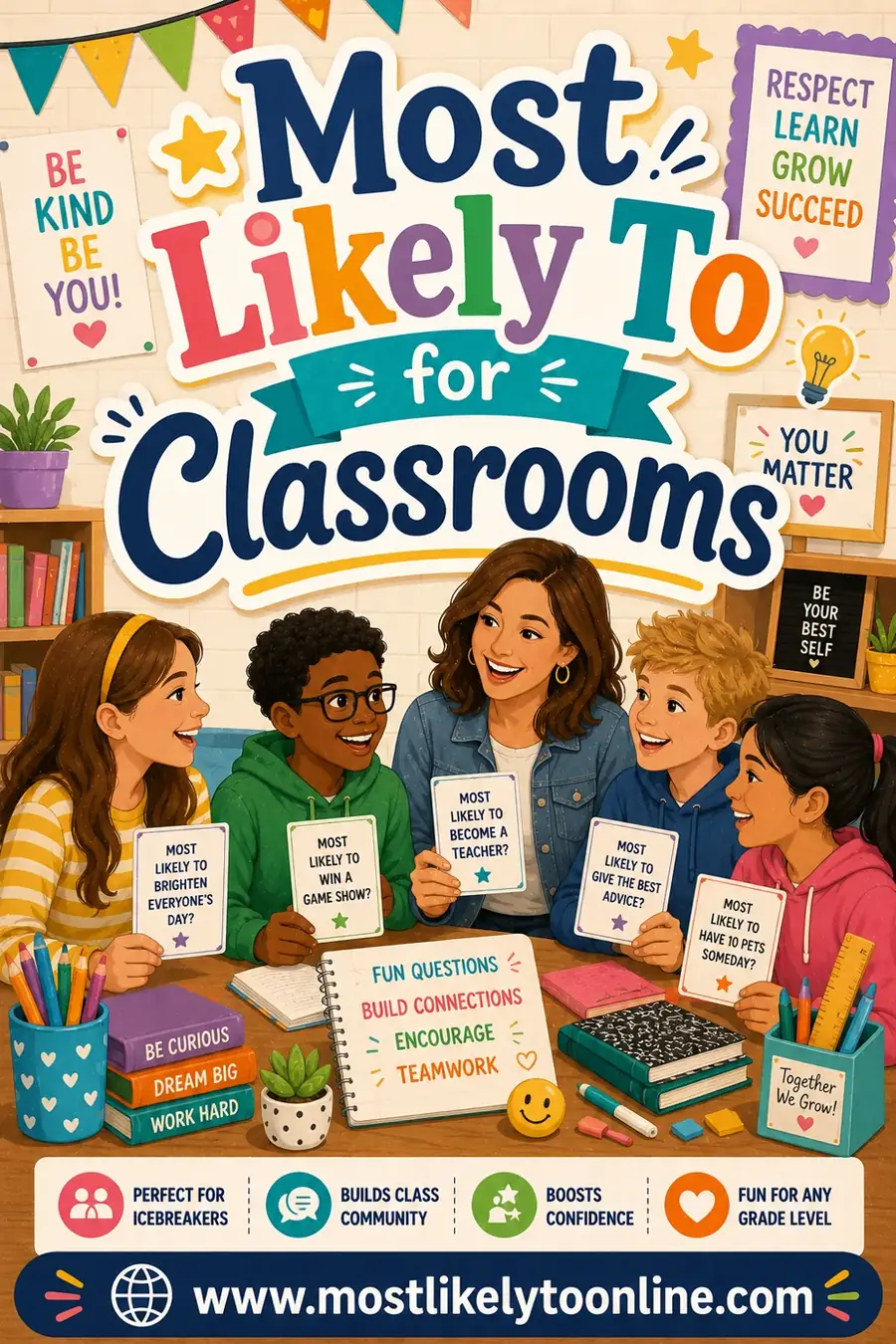
Teachers are always hunting for activities that are fun, fast, and free. Most Likely To checks all three boxes. There's nothing to print, no app to install, and no setup time. You can launch it the moment you have five spare minutes.
It also does more than fill time. When students vote on who's "most likely to write an awesome story" or "help a classmate," they're noticing the best in each other. Used with care, it builds a warmer, more connected class culture, exactly the kind of climate where learning thrives.
And because it's a voting game rather than a performance, it includes everyone, even the shy students who'd never volunteer to stand up in front of the room.
Where It Fits in Your Day
Most Likely To slips into all kinds of classroom moments.
- First-day icebreaker. Help a new class learn names and personalities fast.
- Brain break. Reset energy between lessons in five minutes.
- Friday fun. Reward a good week with a quick, happy game.
- Indoor recess. A no-mess activity for rainy days.
- Substitute plans. Easy enough for any sub to run.
For a dedicated icebreaker approach, our icebreaker guide walks through warming up a new group.
The One Rule That Matters: Keep It Kind
The single most important thing for classroom play is that every prompt is positive. Kids feel singled out easily, so this game only works when every round makes the picked student feel good.
- Use strengths and happy futures. "Most likely to become a scientist" or "most likely to draw an amazing picture."
- Never use anything that could embarrass. Skip prompts about appearance, behavior, grades, or anything negative.
- Make picks a compliment. If a student gets chosen, it should feel like praise, not a callout.
- Allow passing. Any student can sit a round out, no questions asked.
When you keep the bar at "this would make me smile if it were about me," the game stays a force for good.
How to Run It in Class: Step by Step
Here's a simple format that works from elementary through high school.
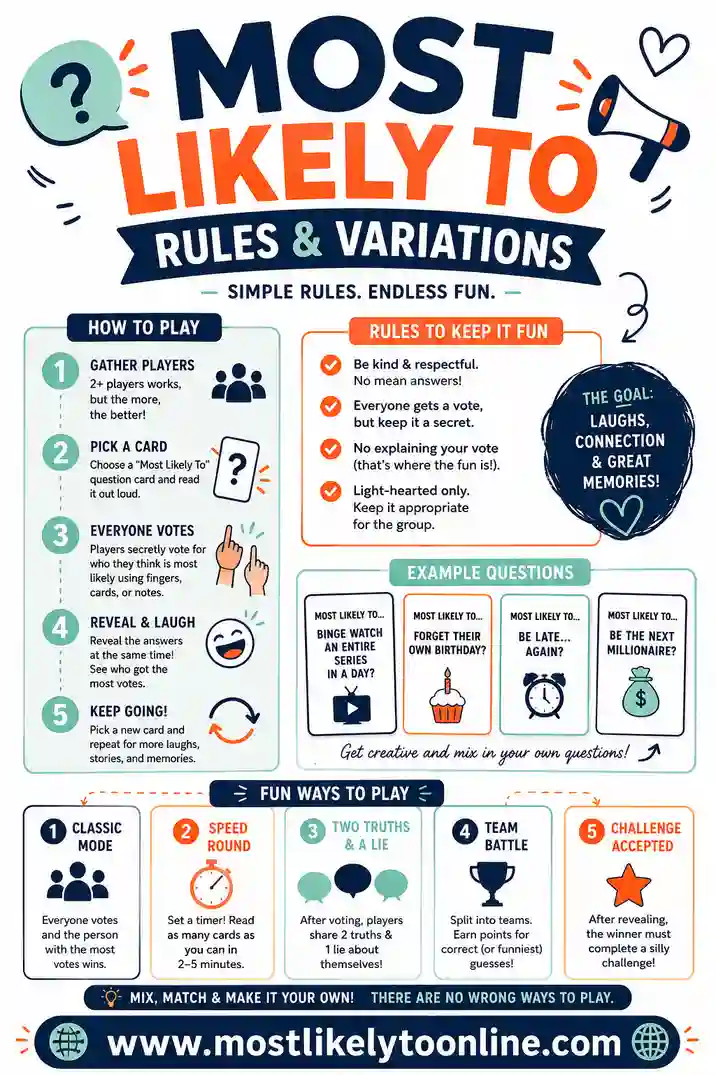
- Explain the game and the kindness rule. Tell students every question is positive and meant to be fun.
- Choose how to vote. Hands-up works best in a classroom, students raise a hand for the classmate they pick.
- Read a positive prompt. For example, "Who's most likely to help a classmate in need?"
- Count the vote. Have students raise hands; note who gets the most.
- Celebrate the pick. A quick, warm "Nice, that's a great one!" keeps it kind.
- Move on. Five to eight rounds is plenty for a brain break.
Keep the pace lively and the tone upbeat. You set the temperature for the whole room.
Using the free tool in class
Project the online game on your board, type in your roster once, and tap to draw each question. It picks a student for you, which removes any sense of favoritism and saves you from managing a list. It's also great for substitutes since it runs itself.
50 School-Safe Classroom Questions (Copy & Paste)
Here's a kind, classroom-ready list. Copy the whole thing or pick what fits your grade.
- Most likely to become a teacher one day
- Most likely to win a spelling bee
- Most likely to draw an amazing picture
- Most likely to help a classmate in need
- Most likely to remember every fun fact
- Most likely to plan a class party
- Most likely to grow up to be an inventor
- Most likely to read the most books
- Most likely to make everyone laugh
- Most likely to be a great team captain
- Most likely to keep their desk super tidy
- Most likely to write an awesome story
- Most likely to solve a tricky puzzle first
- Most likely to cheer on a friend
- Most likely to learn a new language
- Most likely to become a scientist
- Most likely to grow a garden
- Most likely to become a famous artist
- Most likely to invent a cool gadget
- Most likely to be a great speller
- Most likely to remember everyone's name
- Most likely to win a science fair
- Most likely to become an astronaut
- Most likely to write a book someday
- Most likely to help clean up without being asked
- Most likely to share their snack with a friend
- Most likely to ask a great question
- Most likely to become a doctor
- Most likely to be a kind friend to everyone
- Most likely to learn an instrument
- Most likely to become a great athlete
- Most likely to know a fun fact about animals
- Most likely to plant a tree
- Most likely to build something amazing
- Most likely to become a chef
- Most likely to win a math contest
- Most likely to make a new student feel welcome
- Most likely to draw on the whiteboard the best
- Most likely to remember the homework
- Most likely to become an explorer
- Most likely to cheer up a sad friend
- Most likely to write a cool poem
- Most likely to become a movie director
- Most likely to know all the planets
- Most likely to be a great leader
- Most likely to invent a new game
- Most likely to help the teacher
- Most likely to learn to code
- Most likely to become a vet
- Most likely to always do their best
For age-specific sets, see our questions for kids and questions for teens. There's also a focused classroom edition with more school prompts.
Tips by Grade Level
The same game flexes across ages with a few tweaks.
| Grade level | Tips |
|---|---|
| Elementary (K–5) | Use simple, picture-friendly prompts. Keep it short. Celebrate every pick. |
| Middle school (6–8) | Add future-career and hobby prompts. Watch group dynamics closely. |
| High school (9–12) | Use it as a quick icebreaker or Friday treat. Let students suggest kind prompts. |
Younger students love the silly, happy questions. Older students enjoy "future" prompts about careers and goals. Adjust the list to fit, and you've got a game that works for any room.
Classroom Management Tips
A few practices keep the game smooth and inclusive.
- Set the tone first. A quick reminder that every question is positive heads off any teasing.
- Spread the spotlight. If the same student keeps winning, gently steer prompts so others get picked too.
- Watch the quiet kids. Toss in prompts that suit their strengths so they get a happy moment.
- Keep it short. End while energy is high so it stays a treat, not a time-filler.
- Model kindness. Your warm reactions teach students how to respond to each other.
Frequently Asked Questions
Is Most Likely To appropriate for the classroom?
Yes, as long as every prompt is positive and kind. Stick to strengths, talents, and happy futures, and avoid anything about appearance, behavior, or grades. Used this way, it builds connection and makes students feel good about each other.
What grade levels can play?
All of them, from kindergarten through high school. Younger students enjoy simple, silly prompts, while older students like future-career and goal questions. Adjust the question list to fit your class and you're set.
How do students vote in a classroom?
Hands-up voting works best in a classroom setting. Read a prompt, then have students raise a hand for the classmate they pick. The free tool can also pick a student for you, which removes any sense of favoritism.
How long should a classroom game last?
Five to eight rounds, or about five minutes, is ideal for a brain break or icebreaker. Keep it short so it stays a treat. You can run it again another day rather than stretching one session too long.
Do I need any materials?
None. Just your class and a list of prompts. Project the online game on your board and it handles the questions and picking with no printing, no cost, and no setup.
How do I make sure no one feels left out?
Use positive prompts, spread the spotlight so the same students don't always win, and slip in questions that match the strengths of quieter kids. Allow anyone to pass a round, and model warm reactions so every pick feels like a compliment.
Try It with Your Class
Most Likely To gives you a kind, five-minute classroom game that builds connection and makes students smile, no prep, no materials, no cost. Pick a few positive prompts, open the free Most Likely To game, add your roster, and let it run. It's free, there's no sign-up, and it's ready whenever you have a spare moment to brighten the room.